SIR WALTER DNA CERTIFIED ON SALE $13.95 PER SQM, RRP: $15.95

Lorem Ipsum Is Simply Dummy Text
TABLE OF CONTENTS
The Ultimate Guide to Sir Walter Buffalo Turf
CHAPTER 1
The lawns of Victoria. Then, Now and Why.
CHAPTER 2
What is Sir Walter Buffalo Grass and why is it so popular?
CHAPTER 3
Why Choose Sir Walter Turf for your Lawn?
CHAPTER 4
Buying Guide: Where to buy Sir Walter Turf in Melbourne.
CHAPTER 5
How to lay, grow, maintain and fertilise you DNA Certified Sir Walter Buffalo grass
CHAPTER 6
Ordering Sir Walter Turf.
CHAPTER 7
Repairing a DNA Certified Sir Walter Lawn
CHAPTER 8
How to keep Sir Walter Buffalo grass looking good in winter
CHAPTER 1
The lawns of Victoria. Then, Now and Why.

To understand why certain species and varieties of lawn grasses are used in the lawns of Melbourne and the State of Victoria, it is worth looking back on why they became the most suitable.
Lawn grass varieties and the types of grasses used in Victorian home gardens have evolved over time. The species used since 1900 were determined by factors such as tradition, shade, wear, availability, mower evolution, irrigation system developments, and climate.
Early 20th century Victorian lawns consisted of the so called “English lawn” types. These lawn types were mainly bentgrass, fine fescue, and Kentucky bluegrass.
Despite not being available as a seed, Buffalo grass was commonly used in the gardens of Melbourne’s inner suburbs during the early 1900’s. Seed Merchant catalogues from 1900-1910 show Buffalo grass was available as vegetative runners and sold in bag lots.
The Terrace houses and small yards of the era did not provide ideal growing conditions for some of the traditional English grass types due to shade and a lack of irrigation availability. Buffalo grass thrived under such conditions and the old buffalo type was popular as a front lawn of inner-city suburbs such as Carlton, Parkville, Brunswick, Moonee Ponds, Essendon, Albert Park and Ascot Vale.
The original Buffalo grass used in Victoria had a hard leaf and quickly developed thatch, making it difficult to mow with the domestic equipment available at the time.
The Early Buffalo types had poor cold temperature tolerance and lost colour from mid-Autumn until late spring. These negatives in the old Buffalo varieties saw a rise in the popularity of the cool season, softer leaf types mentioned earlier such as Bentgrass, Fine fescue, Kentucky Bluegrass and Ryegrass.
In the 1970’s Fineleaf ryegrass types were used extensively and became the most popular grass type used in quality seed mixes throughout Southern Victoria.
In the 1980’s, extreme drought and water restrictions hit Victoria, and the ability of the new dwarf type Tall Fescue varieties to stay green with less water led to an increase in the popularity of this species.
The Millennial Drought
The extreme drought that hit Victoria during the first decade of the 21st Century resulted in further changes to the species of grass used in lawns throughout that state.
The new varieties of the so-called “warm season grasses” such as soft leaf Buffalo (Stenotaphrum secundatum), Couchgrass (Cynadon spp), and Kikuyu (Pennisetum clandestinum), grew significantly in popularity at this time due to their superior drought tolerance and drought avoidance capabilities. Severe water restrictions were imposed on water use for lawns and sports fields. It was a time of radical change in lawn grass types for Victoria.
The traditional cool season types cannot survive without frequent irrigation and the imposed water restrictions brought a change of attitude in gardeners’ habits.
Fortunately, new and improved Buffalo, couch and Kikuyu varieties were available as Instant turf at this time. In the face of water restrictions, the drought tolerance of Buffalo and couch made them an ideal choice for the Victorian homeowner. In addition, the new varieties were a vast improvement on the old types with a softer leaf, shorter winter dormancy period and better hardiness in dry conditions.
The most popular choice by Victorian and Australian gardeners amongst the new guard of grasses became DNA Certified Sir Walter. Statistically DNA Certified Sir Walter is Australia’s and Victoria’s largest selling grass cultivar.
CHAPTER 2
What is Sir Walter Buffalo Grass and why is it so popular?
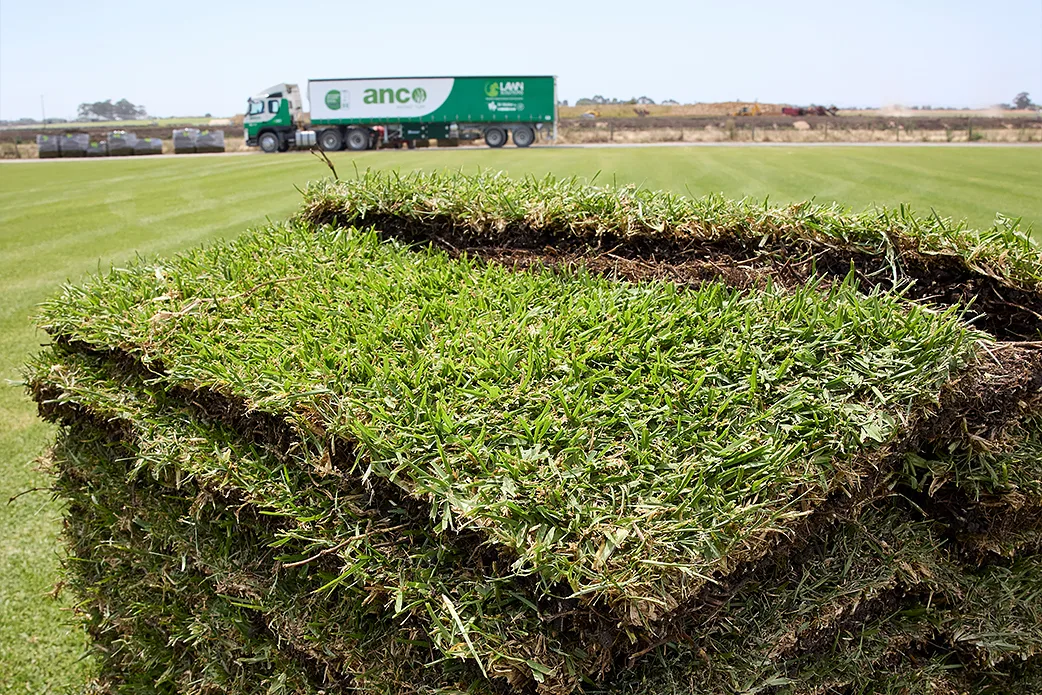
In the botanical world of lawn grasses, one grass reigns supreme. DNA Certified Sir Walter Buffalo grass is Australia’s most popular lawn grass. Its versatile nature to perform in a vast variety of conditions, make it the ideal grass for Australian lawns.
Its soft green leaf, heat, drought sun and shade tolerance, along with a low maintenance requirement are just some of the reasons that more than 135 million square metres of DNA Certified Sir Walter have been sold in Australia.
Unlike Couch grass and Kikuyu, Sir Walter does not have underground runners called Rhizomes, so it is less invasive and easy to maintain around garden edges.
DNA Certified Sir Walter is also one of best grasses for tolerating lawn grub invasion in Victoria.
The original plant material of Buffalo grass (Stenotaphrum secundatum) in Australia was thought to have arrived aboard a ship called the SS Buffalo from which it takes its name around 1840. Although called Buffalo grass in Australia it goes by the name of St Augustine grass in the United States as well as various other names around the world including but not limited to Quickgrass, and Mission grass.
With its ability to be mown at heights that create a dense sward coupled with its inherent drought, shade and heat tolerance, buffalo grass soon became popular as a lawn species throughout the Southern States of Australia in the early 20th Century.
Over time Buffalo grass became naturalised in parts of Australia especially in the Hunter Valley of NSW where it was documented as being grown as an Instant Turf crop in the 1970’s and possibly earlier.
It was from this location that Sir Walter was discovered growing within a Turf farmers crop of the old variety of Buffalo called Shademaster. Mr Brent Redman discovered a patch within his Shademaster crop that exhibited a better colour throughout the winter period than the Shademaster variety. In addition, the root system was more extensive, and the leaf was a lot softer than the other varieties being grown for turf at the time.
Extensive trial work began on the new variety and following the due process required to register a new plant variety, it was licenced under the name Sir Walter.
From its discovery in the 1980’s DNA Certified Sir Walter has grown to be the most widely used turf variety in Australia.
DNA Certified Sir Walter is available as Instant turf and can be purchased in small lots as low as one square metre to thousands of square metres.
Once your Sir Walter turf arrives it should be laid immediately to avoid drying out the turf which would slow its root development.
For two weeks following the turf laying process, the turf should be kept damp until the root system develops sufficiently. This may require watering at least once a day and even more in the initial week post laying depending on the weather conditions.
Once the turf cannot be lifted, watering frequency can be lessened and eventually the new drought tolerant Buffalo lawn will require very little water to remain green.
In the southern states during the cooler months from late Autumn to early spring,
Sir Walter should only require watering during extended dry periods to keep the root system slightly damp.
Regular mowing at cutting heights above 30mm will ensure Sir Walter stays dense in the lawn sward and resist weed invasion. A good rule of thumb is to never cut more than one third of the leaf length off at a time.
Regular mowing is one of the key factors in keeping most lawn types thick and healthy.
Mower blades should be sharp and replace damaged blades to ensure the leaf is cut cleanly and leaf blades are not shattered during the mowing process.
Occasional fertilising of the lawn during the growing period from October until April will keep the Sir Walter Lawn healthy and lush.
CHAPTER 3
Why Choose Sir Walter Turf for your Lawn?
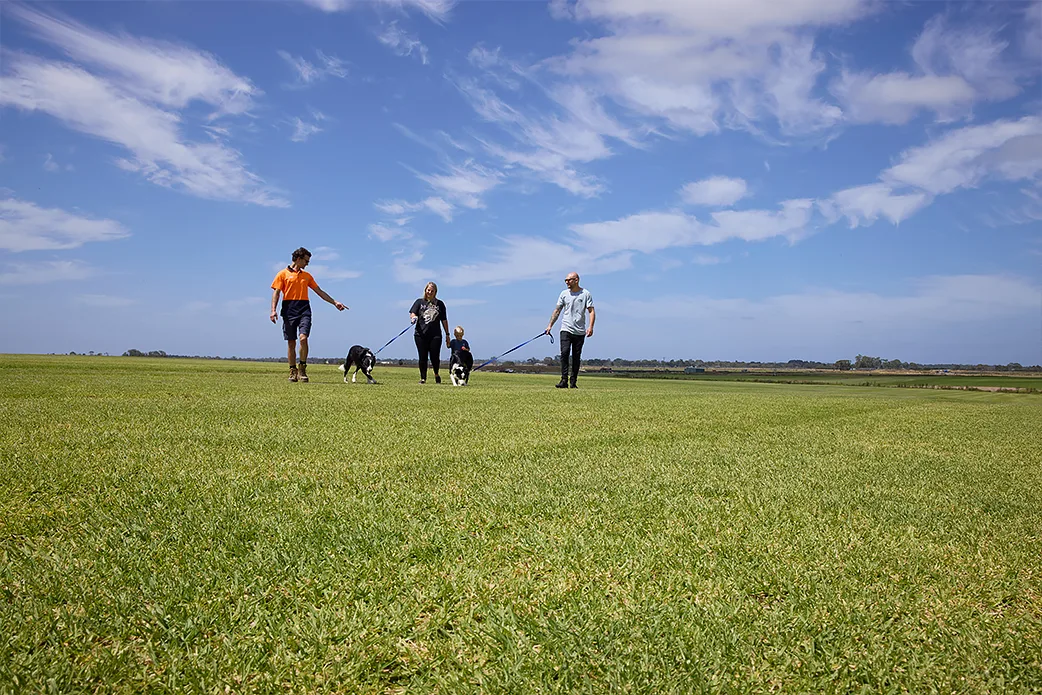
When looking for a suitable turf variety for your lawn you should make a list of the conditions it will be subjected to and then select one that suits all or most of your requirements.
The requirements for your lawn may include an ability to handle sun, shade, wear, pets, low water requirements, and the ability to self-repair. Low maintenance and fertility requirements and a low allergy potential are other things that you may require.
DNA Certified Sir Walter ticks the box for all these requirements and makes it a standout selection for the homes of Melbourne.
Some turf types such as Couch and Kikuyu do not grow well in shade while others such as Tall Fescue and Ryegrass require more frequent watering to stay alive.
A handy tool that will help you to ascertain what turf type and variety suits your requirements can be found in this link.
Provided it is actively growing, a 100 square metre lawn produces enough oxygen to sustain four people daily. Lawns are also a carbon sink and dust suppressant, and they cool their surrounding area.
It is well documented that the surface area of a lush lawn is significantly less than paving, hard surfaces and synthetic turf.
Placing a lawn near an external air conditioning intake results in reduced energy consumption to cool the air as it enters at a lower temperature than an air conditioning external intake duct surrounded by concrete or paving.
For a grass to be considered environmentally beneficial, it needs to have low water and maintenance requirements. DNA Sir Walter has these traits and once established will provide you with all its environmental benefits.
The State of Victoria has a diverse climate. From snow-capped mountains in winter to hot and dry conditions in summer, where temperatures in the forties are not uncommon.
In Melbourne alone the climate varies significantly across the length and breadth of its suburbs and nearby towns.
The Dandenong’s, Gisborne, Mt Macedon, can all receive snowfalls in their higher parts. Rainfall in the Western and Northern suburbs such as Werribee, Essendon, Keilor and Melton is far less than that of the East and South. Soil types are also different from one area to another.
Very few grasses grow well in all these variable conditions.
DNA Certified Sir Walter Buffalo is one that will handle most conditions including sunny and shaded locations.
Sir Walter will grow well in clay or sandy soils as well as both high and low PH Soils.
The inherent drought tolerance in Sir Walter keeps it green throughout the trying conditions that a hot summer throws at Melbourne’s lawns.
Shaded areas can be difficult to successfully grow grass in. Sir Walter will outperform other lawn types in low light areas where shading is caused by structures such as those encountered on the south side of a house.
Provided it receives an average of three hours direct light per day, Sir Walter will grow well, especially if the shade is just dappled light caused by trees.
CHAPTER 4
Buying Guide: Where to buy Sir Walter Turf in Melbourne.
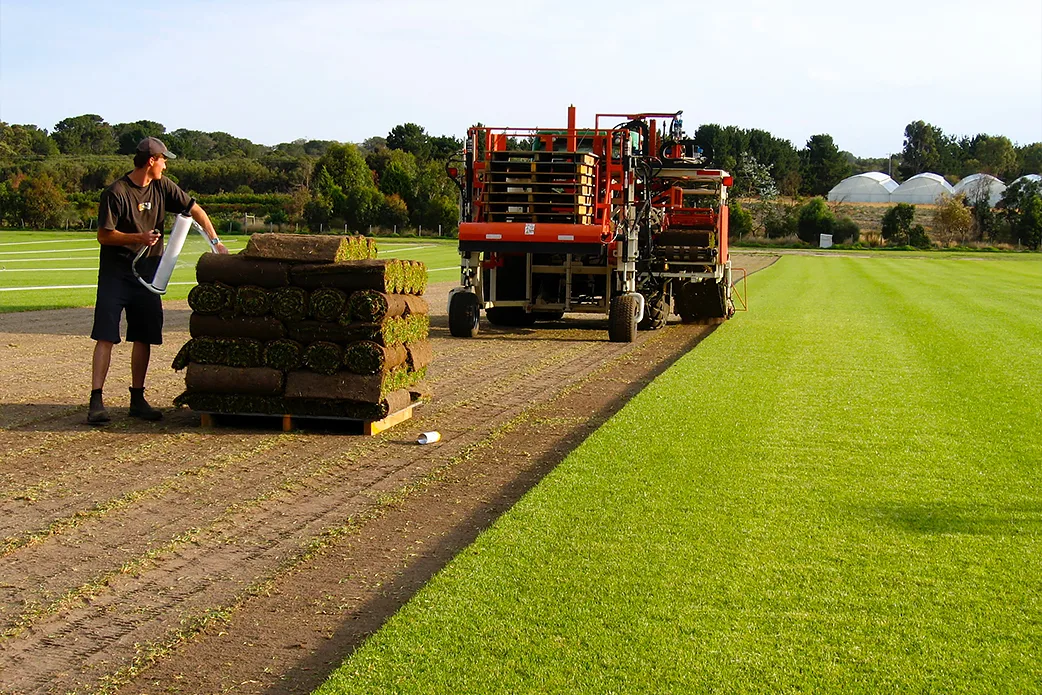
Once you have decided to purchase DNA Certified Sir Walter Buffalo you will need to consider where to purchase it from. One of the most important factors for successfully establishing a lawn from Instant Turf is to secure your turf fresh from a turf farm.
There are many outlets supplying Instant Turf. Storing turf at depots for prolonged periods will often cook the turf and slow its establishment rate once it finally arrives at your house and lay it.
Anco Turf is delivered freshly cut on their own trucks ensuring there are no delays from the time of harvest to the time it arrives at your home. Instructions for the delivery drop point can be conveyed to the farm staff when ordering. Anco tracks their trucks and will give you a delivery time the day prior to dropping off your turf.
The Anco staff are experts in all things Turf and will advise you on the needs of your new lawn purchase both prior and post-delivery. They are always available to chat about your lawn and advise what is required to keep Australia’s number one selling lawn green, lush and healthy throughout its life at your home.
Purchasing your DNA Certified Sir Walter fresh from the farm and at the right price is as simple as going online to https://ancoturf-v2.sharptest.com.au/
CHAPTER 5
How to lay, grow, maintain and fertilise you DNA Certified Sir Walter Buffalo grass
Best soil for lawns
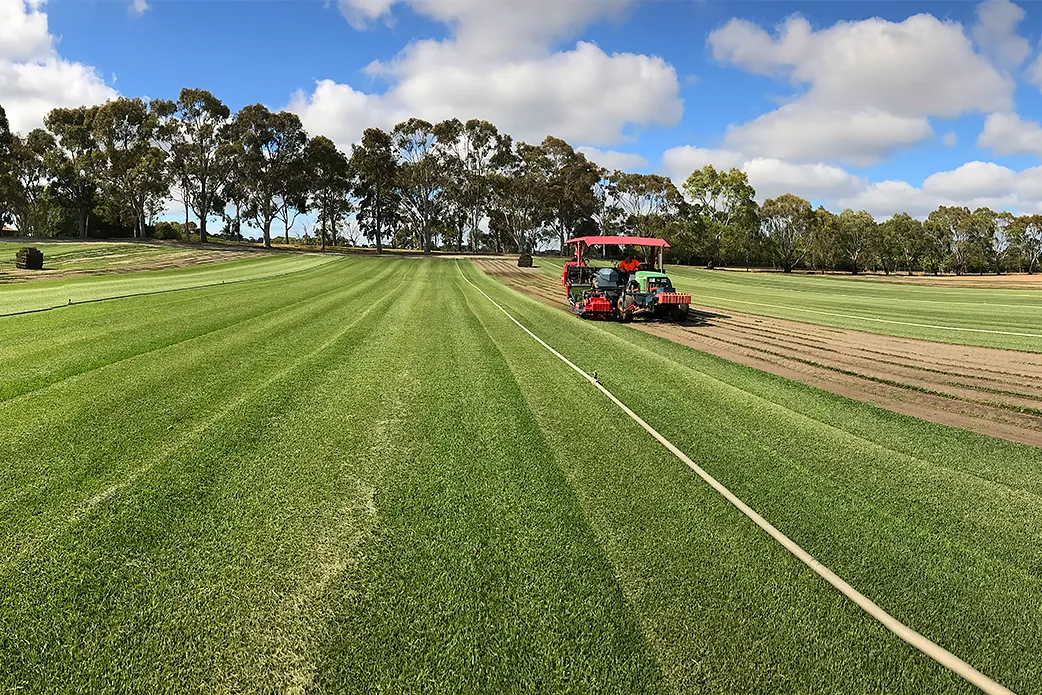
One of the most important things for a successful lawn establishment from Instant turf is to lay it onto a bed of quality soil. The best soil type for lawns is Sandy loam. Melbourne’s famous golf courses such as Royal Melbourne and Kingston Heath are on what is known as the sand belt. The soil at these courses is a pure sand and the turf quality produced at these world-renowned courses is second to none. The soil type is one of the contributing factors to why these courses drain well and have exceptional quality.
Topsoil. What type and what quantity.
The roots of your new lawn will establish rapidly in a good sandy loam soil. If you are lucky enough to live in a sandy part of the State of Victoria, then you probably won’t need to import topsoil for your lawn. You will however need to eradicate any existing grass or weeds and then dig the soil over with a spade, fork or hoe. Follow this by levelling the area with a rake or Level-Lawn tool and consolidate the soil using a light roller.
If your soil is a heavy clay type, it is advisable to purchase sandy loam soil that is free draining and suitable for lawns. If you need to purchase new soil, aim to cover the existing soil base with at least 100mm of lawn topsoil. More is better, providing the new soil drains well.
Avoid purchasing soils with high clay content and lots of organic matter such as mulch, or mushroom compost. Clay soils tend to compact easily which is detrimental for a healthy root structure, and high organic content soils are prone to become water repellent which is known as hydrophobic. Hydrophobic soils don’t allow water to reach the root zone evenly and in summer your lawn will suffer from dehydration which results in a subsequent loss of colour, and shrivelling leaves.
Make sure you apply an even depth of new topsoil across the lawn area.
Your new turf will be approximately 25mm thick so if you are laying it next to a path, you should ensure the soil bed is at least 25mm below the path.
Lawn Starter fertiliser
Once the lawn soil bed is levelled and compacted you should apply Lawn Starter fertiliser at the correct rate to the soil surface prior to turfing. There is no need to rake this in.
Lawn Starter fertiliser contains essential nutrients in a balanced percentage that are essential for rapid root growth. Lawn Starter should always be used at the label rate prior to laying a new lawn with Turf or sowing with lawn seed.
If you are unsure as to how much soil or where to purchase it from, contact the Anco helpline on freecall 1800 010110 or email sales@ancoturf.com.au
CHAPTER 6
Ordering Sir Walter Turf.
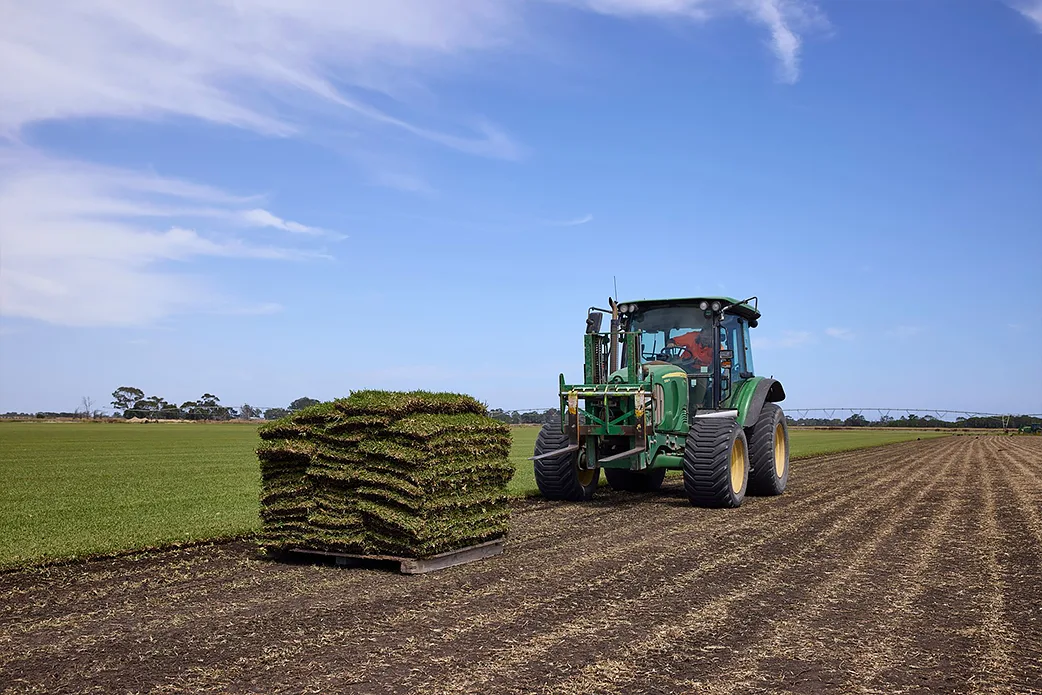
Order your turf in advance once you know the exact amount required and the date your lawn soil bed will be ready. If you are not certain of the amount you require, the Anco website provides a handy calculator that will help you to determine how much you need. https://ancoturf-v2.sharptest.com.au/turf-calculator
Laying your new turf on the day it arrives is paramount for its rapid establishment.
In summer delaying the laying process can result in turf dying before it is laid.
If your job is a large one and will take a whole day to lay, it is advisable to store the delivered turf that is ready for laying later in the day in a shady spot. This will avoid the turf overheating, prior to the afternoon laying session.
Once your turf is laid it is reliant upon you to maintain it by applying adequate irrigation. This may require one to three watering applications per day depending on weather conditions.
As a guide it is recommended that the turf and the first few centimetres of the soil bed is kept constantly damp until the turf root system is established. To determine this, you can gently lift and peel back a corner of one or two turf pieces to see if the roots have pegged down. Once the turf cannot be lifted you can reduce the frequency of watering to an as needs basis.
DNA Certified Sir Walter is drought tolerant once its root system is established and it will rarely require watering except for hot summer periods. Avoid overwatering an established Sir Walter lawn as this depletes the soil of nutrients and can create disease issues if the soil profile is waterlogged.
Fertilising DNA Certified Sir Walter
Applying a quality lawn food during the growing seasons will keep your lawn green and growing well throughout most of the year. It is recommended to apply a high Nitrogen fertiliser at the start of Spring and Autumn each year. A prill fertiliser such as Anco Lawn Food https://ancoturf-v2.sharptest.com.au/product/lawn-food-5kg/ is the perfect and economical fertiliser for this purpose.
In late Autumn a liquid fertiliser containing some Iron will help keep your lawn healthy leading into Winter. A simple to use Hose on Liquid fertiliser to use from late March to early June is Lawn Solutions Exceed Fertiliser which is available online or in store at Anco Turf. https://ancoturf-v2.sharptest.com.au/product/exceed-liquid-fertiliser-hose-on-2l/
From time-to-time weeds will appear in your Buffalo lawn. If you don’t want to hand weed the lawn, use an appropriate herbicide that is suitable for use on Buffalo lawns. Not all selective herbicides are safe to use on a Buffalo lawn so make sure to read the label to determine if it can be.
A product that will eradicate existing broadleaf weed problems is Bow and Arrow https://ancoturf-v2.sharptest.com.au/product/bow-arrow-herbicide-500ml/
For optimal efficiency and successful weed kill, always apply herbicides at the label rate. Higher rates will not give a better kill and may damage your grass.
To stop weed seeds from appearing over winter you can apply a pre-emergent herbicide that is conveniently contained in a fertiliser Prill. The product is called Oxafert. Apply it in late Autumn for best results. The fertiliser component of Oxafert is a slow-release type and it is ideal for applications before winter sets in. You can read more about Oxafert or purchase it through this link
CHAPTER 7
Repairing a DNA Certified Sir Walter Lawn
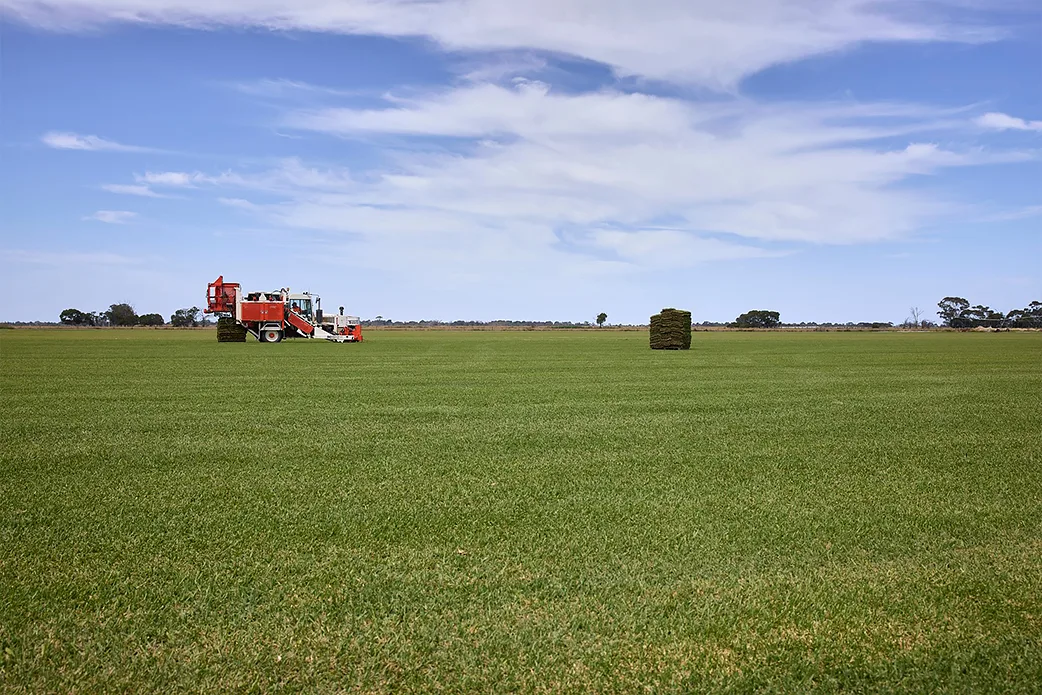
Most domestic Buffalo lawns will require some form of repair during their lifespan and there are several ways to do this.
It is important to match your turf type exactly, as each grass type shows some form of variation and adding different types can leave your lawn looking patchy. Ensure you secure DNA Certified Sir Walter if that is what you already have, by purchasing it directly from a registered grower. Beware of suppliers that claim theirs is “derived from” or the “same as”. There is only one Certified DNA Certified Sir Walter.
Patch repairs
To patch a Sir Walter lawn, you can either cut away the dead patch and replace it with new turf or place a turf plug taken from your own lawn into the repair area. To create a plug, use a sharp spade and cut a block of healthy turf from a back section or an area that isn’t highly visible. Top up the patch that the plug was removed from with some sand and level it to the surrounding lawn height.
You can also plant runners from your own lawn into the section that needs repairing. Simply pull up some runners from the lawn edge or a thick section of the lawn and cut them into 40-100mm lengths. Then get a screwdriver and punch a hole with it into the area that needs repairing and place the runner into it. The more runners in the area the better. Follow the planting with a light dressing of some topsoil or sand.
Repairing with either the plug or runners’ system is best undertaken in Spring and early summer. Runner and plug repairs into the patch cover the ground at a more rapid rate during this period. Patch Turfing can be done at any time. Turfing in winter requires a longer period to establish, and wear on the area should be avoided until it does.
Whichever way you choose to repair your lawn, you should treat the repaired area the same as you would a newly seeded or turfed lawn. Keeping the repaired area constantly damp until it takes root and avoiding foot traffic on it while it develops, will ensure success.
Thatchy lawns are harder to mow and can show unsightly lawn mower scalp marks if not mown regularly. Water is also trapped in the thatch layer and starves the roots of moisture.
To remove thatch from a lawn it is periodically necessary to perform a dethatching process. Once a year is sufficient to do this and the best time for dethatching throughout Victoria is around late November until the end of December. Dethatching at this stage allows the grass to grow back rapidly. Delaying the dethatching until late summer or autumn, may result in a patchy lawn through winter that is open to weed invasion and a reduced wear tolerance.
The dethatching process for Buffalo grass can be performed by lightly scalping the lawn with a mower on a low cutting height. Be careful not to remove too many runners as the lawn will not grow back. Prior to mowing the lawn shorter than normal, use a leaf rake to lift off some of the runners and the dead underlying vegetation. When dethatching, always use a catcher on the mower to collect the dead grass.
Following the dethatch procedure, an application of lawn food and a thorough watering will kickstart the lawn back into life, resulting in a new greener look with more soft leaf within a few weeks.
CHAPTER 8
How to keep Sir Walter Buffalo grass looking good in winter
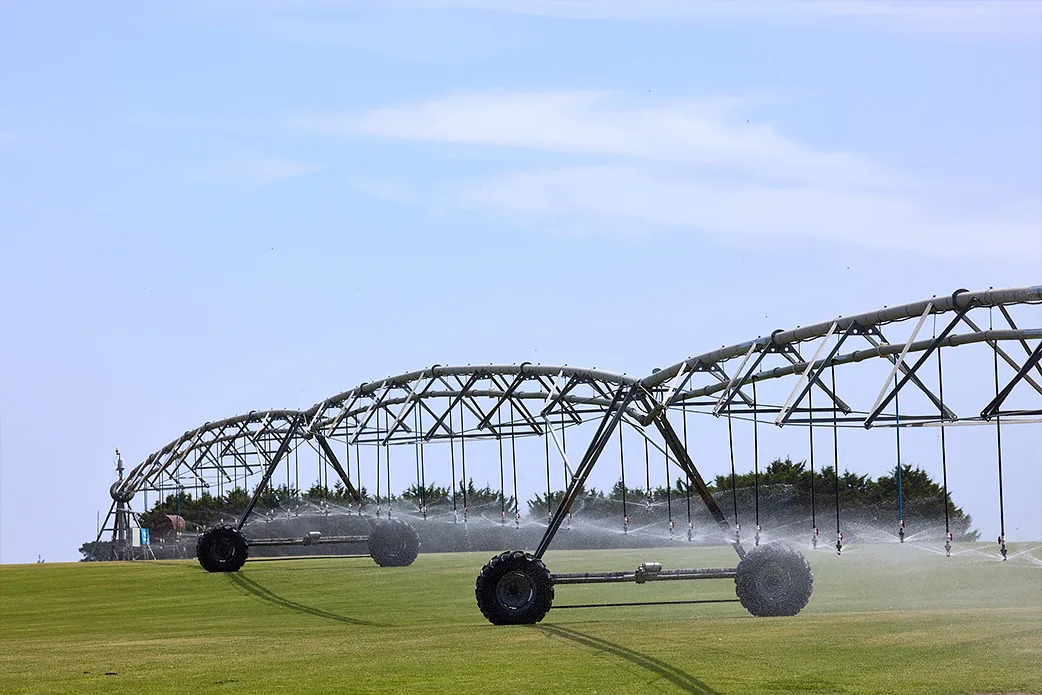
Winter can be a tough time to keep a lawn looking good in Melbourne especially if it is Buffalo grass, Kikuyu or couch.
Fortunately, the newer varieties such as DNA Certified Sir Walter Buffalo tolerate conditions better than those that were available in the past and are generally greener than previous generations of these lawn types.
There are several maintenance procedures that you can use on your turf that will help it to look better throughout the cooler months.
Fertilising in late autumn while the weather is still warm will help the plant to take up nutrients that will sustain it during winter. Use a quality lawn food once prior to winter such as Anco Lawn food during the period from late March-May. to enhance colour leading into winter. https://ancoturf-v2.sharptest.com.au/product/lawn-food-5kg/
If you missed the early autumn application of Anco Lawn Food, a liquid fertiliser is a good option later in the season and before winter sets in. Exceed liquid fertiliser is a good option for late autumn and early winter applications. https://ancoturf-v2.sharptest.com.au/product/exceed-liquid-fertiliser-hose-on-2l/
From early March the mowing height should be raised. Winter creates increased shade near buildings and a longer leaf on the Buffalo is beneficial in shady areas. The longer leaf will also help to resist any wear that the lawn is subjected to.
If a long dry period occurs during winter, the lawn should be watered occasionally as the root system will still be active.
Prior to winter an application of Oxafert will control most weeds that are yet to emerge. It is safe to use on Buffalo lawns and has the added benefit of containing a slow-release fertiliser. It comes in a prill form and is easily applied.
Winter dormant lawns that have lost colour will instantly green up with an application of Colour Guard Plus https://ancoturf-v2.sharptest.com.au/product/lawn-solutions-iron-guard-plus-2-5litre/
This product is available in an easy-to-use hose on pack or as a concentrate.

Get the latest news and offers delivered to your inbox
 5175 S Gippsland Hwy, Lang Lang VIC 3984, Australia1350 Surf Coast Hwy, Torquay VIC 3228, Australia1 Woorinen-Vinifera Rd, Woorinen South VIC 3588, Australia


© [YEAR] Anco Seed and Turf Pty Ltd. Built & Managed by Sharp Instincts

