SIR WALTER DNA CERTIFIED ON SALE $13.95 PER SQM, RRP: $15.95
Lorem Ipsum Is Simply Dummy Text
Prior preparation of your area will ensure the best results are achieved once your new turf is laid. The underlay, subsoil and fertiliser need to be checked so that your new turf has a healthy bed to grow on. Otherwise, your lawn will struggle to grow efficiently and may not establish properly.
To help you lay your turf correctly and ensure it continues to flourish for years to come, you can engage the help of a professional. Anco Turf can recommend a turf installer based on your suburb who can provide you with landscaping & laying services.

When planning how to lay instant turf on your property, proper soil preparation is essential. For best results, prepare a well-worked soil base of at least 100mm. If your existing soil is suitable to use, it may be as simple as using a rotary hoe or digging up and turning over the soil for smaller areas. If your existing soil isn’t sufficient or of poor quality, you will need to apply a soil mix such as Sandy Loam evenly across the area. Your local garden supplier can advise you on the correct turf blend soil to use.
Rake and smooth the soil removing any rocks, roots or debris. Roll and consolidate the soil lightly using a water roller; this will firm the soil surface and reveal low areas that need more soil. Keep the soil level 20-25mm below paths etc. which will ensure your lawn ends up the same height as your paths or edging.
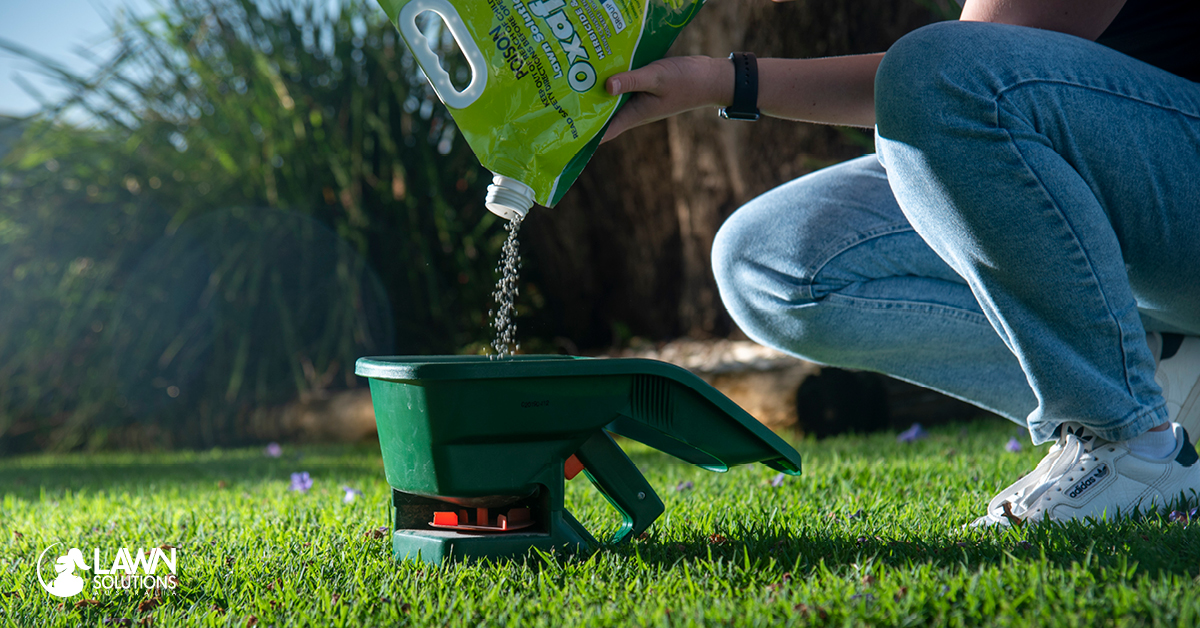
All orders of turf 50sqm or more receive free starter fertiliser. If you are ordering a smaller quantity of turf, you can easily add a bag of our starter fertiliser to your order. The starter fertiliser pellets give your new turf the perfect balance of nutrients while establishing.

Before ordering your new lawn, make sure you have measured the area correctly using a tape measure to calculate the required amount of turf needed. If you require any help working out the square meters of turf needed for your area, just click on the Turf Calculator button below. If you are still unsure on how to work out the total amount of turf needed for your area, feel free to give our office a call on 1800 010 110 and one of our lovely office staff will be able to assist you.
Please measure your turf area carefully as we are unable to accept returns following a new lawn installation.
Now you should be ready to order your new lawn! Just make sure you schedule your delivery of turf only after your preparation work has been completed and you are ready to install your new grass. Instant turf is a perishable product, so it is best to install turf lawn on the same day that it is delivered.
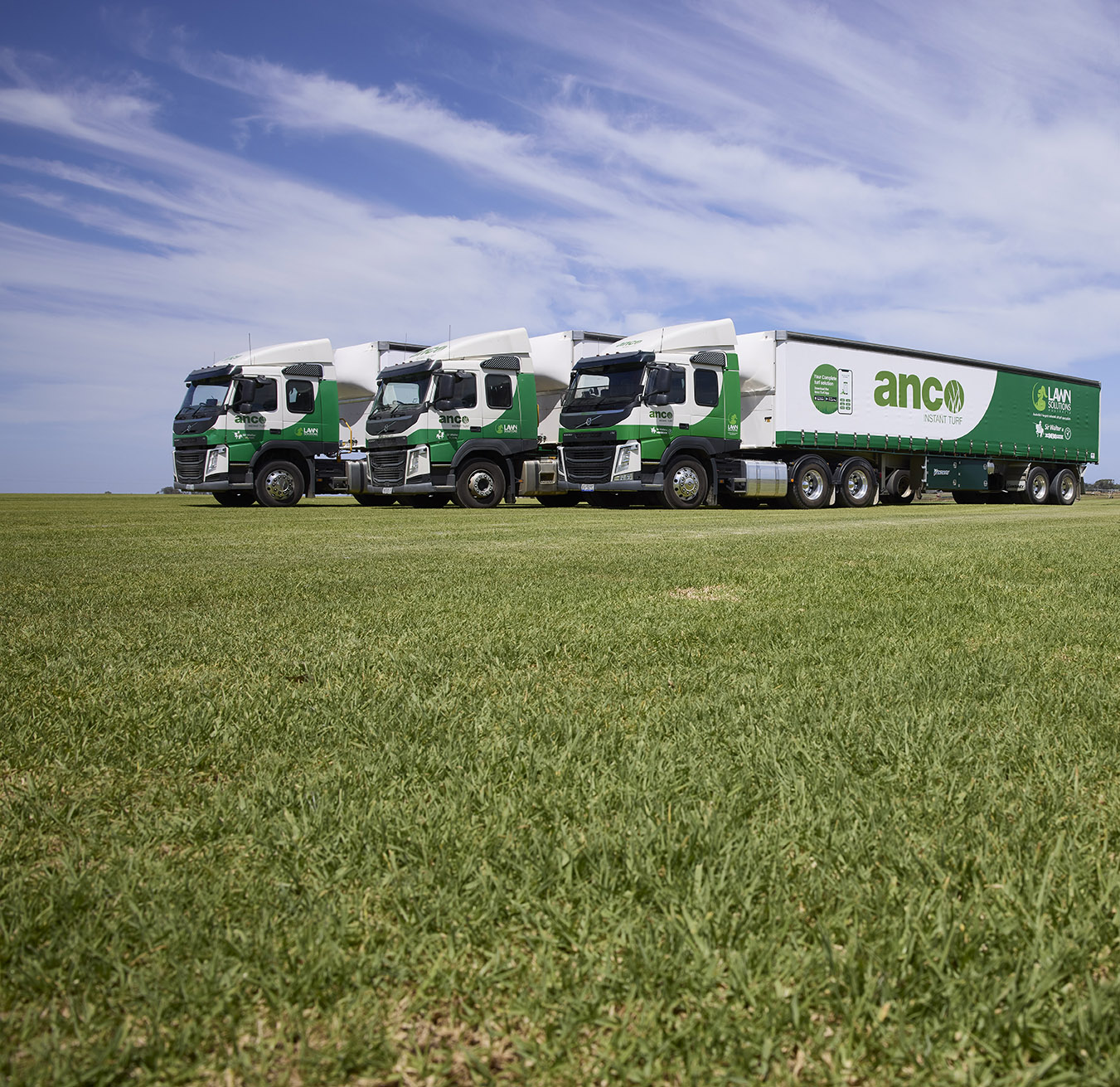
Our fleet of Semi Trailers delivers directly from the farm to your door from Monday to Saturday. Deliveries are usually in the morning so that your turf can be laid fresh on the day of delivery.
Our Drivers will contact you on the afternoon prior to the next day’s delivery with a delivery time.
Our Truck mounted forklifts drop the turf curbside and if required, will place the turf where instructed. Deliveries to be placed inside a property boundary require the signing of a waiver by the property owner. Click on this to print a copy of the delivery waiver. Please get this signed by the owner and return it to us prior to delivery.
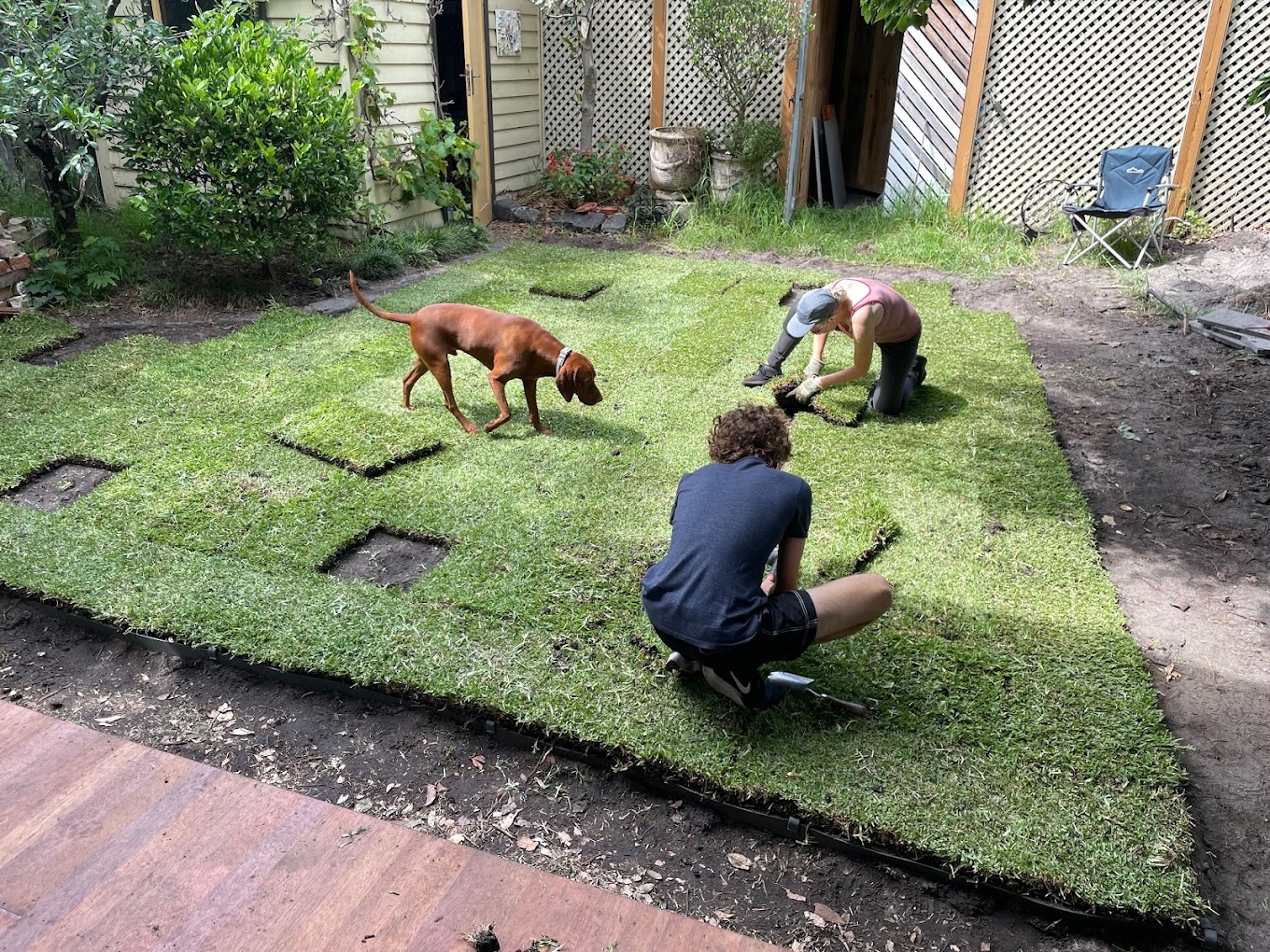
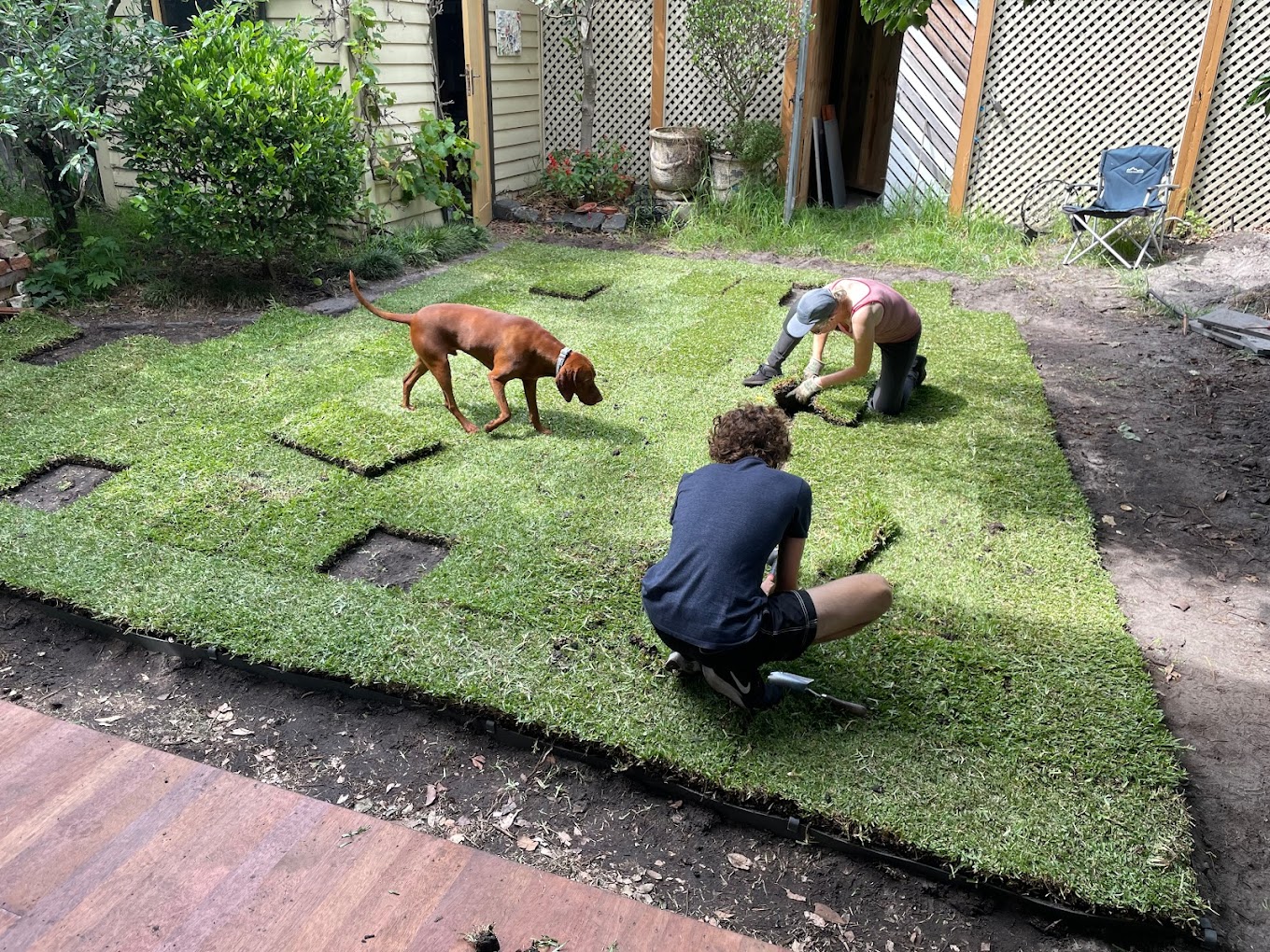
Install your lawn immediately upon delivery. Turf is a living plant that requires ground contact and moisture to survive. In hot weather, protect unlaid turf by placing stacks in the shade, or lightly sprinkling with water. Begin installing turf along the longest straight line such as a driveway or path. Butt and push edges and ends against each other tightly, without stretching. Avoid gaps or overlapping. Stagger the joints in each row in a brick-like fashion, using a large knife to cut turf or trim corners etc. Avoid leaving small strips at outer edges as they will not retain moisture. If you are laying grass turf on a slope, be sure to place the turf rolls or strips across the slope.
Rolling turf after laying is important. After the turf grass installation process, roll the lawn with a lawn roller to improve turf-to-soil contact and remove air pockets.
Following turf installation and until it is established, you should avoid walking or kneeling on the new turf as this will cause indentations or air pockets.
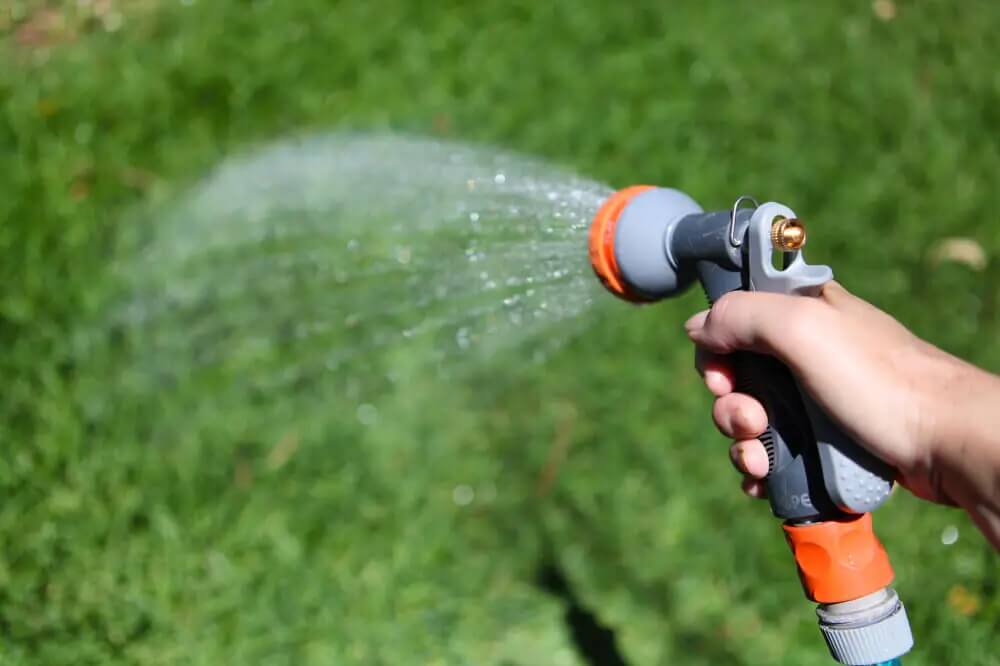
-Watering freshly laid turf-
0-4 weeks
New turf should always be watered as soon as possible after laying and then kept damp continuously for the establishment period (2-8 weeks depending on variety and season). Water your new lawn 2-3 times a day and ensure that it does not dry out! You may require more water in extreme heat.
-Watering established turf-
Weeks 4-6+
Once your lawns new root system has started to establish (the turf is firm to the ground), you can start to gradually decrease your watering frequency and increase the time. It is best to do this slowly, so your lawn can adapt to its new routine. Decrease to a longer water once a day, then every second day and so on, until you are able to give your lawn one deep soak (1-2hours), once a week. These longer waters will help your lawn to search for its own water in the soil, creating stronger and deeper roots.
What is the best way to water your lawn?
Not only is water essential for your turf, but the way in which you water is VERY important too. The most efficient and effective way to water your lawn is by using a portable sprinkler or a pop-up irrigation system. This method of watering delivers water evenly and quickly. If you are using a portable sprinkler, just be mindful to move the sprinkler around your yard as required to ensure your whole lawn is receiving water. (HANDY TIP: Add a tap timer to your tap so you can just ‘Set & Forget’)
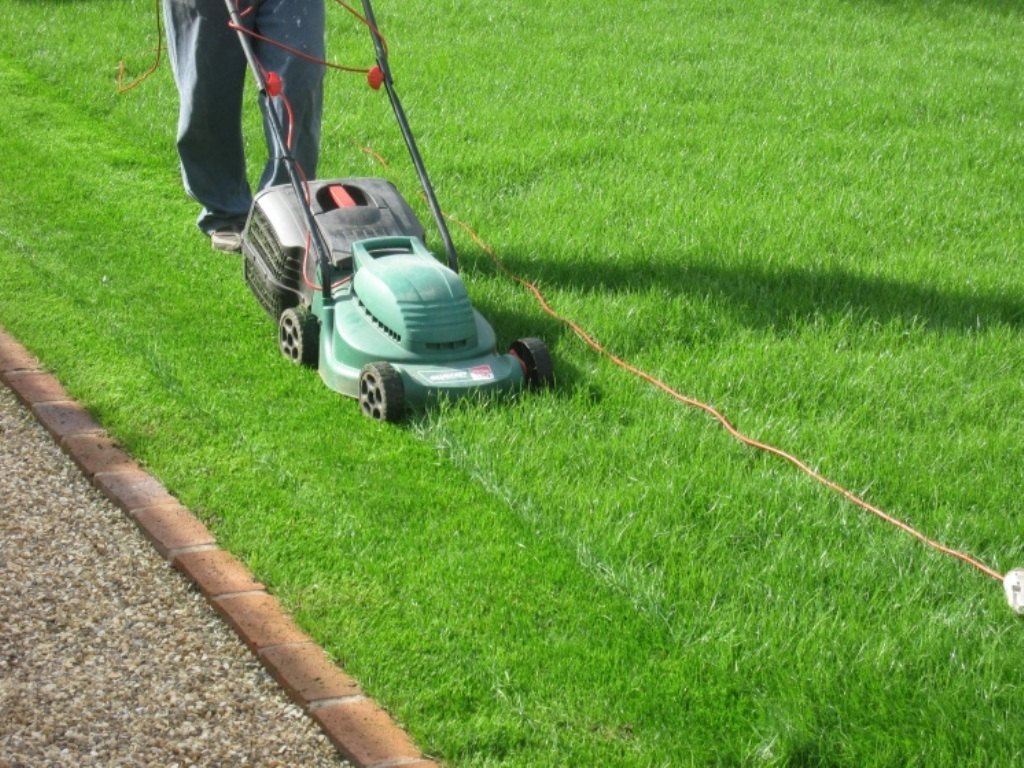
1. Mowing
Regular mowing with either a rotary or cylinder-type mower is essential for your instant turf in Melbourne and Victoria. Your new instant lawn should be mown 10-14 days after installation. Continue to mow often, generally no more than 1/3 of the grass height at mowing. Keep your mower blades sharp. For correct cutting heights, refer to the Instant Turf page.
2. Fertilizing
Fertilizers should be applied on a regular basis all year round. Our professional lawn supply team can advise which fertiliser will suit your instant turf type and budget. Small applications at frequent intervals give the best results.
For example, 1 ½kg/100m2 per month of lawn fertilizer will keep your new lawn in an active, healthy condition.
From time to time you may need advice or assistance in caring for your lawn. Contact us directly for the best lawn care advice possible.
Keep in mind that your new lawn increases your property value significantly. Proper care will remain a great asset, providing beauty, a clean playing surface and an improved environment for many years.
Lorem Ipsum is simply dummy text of the printing and typesetting industry. Lorem Ipsum has been the industry’s standard dummy text ever since the 1500s, when an unknown printer took a galley of type and scrambled it to make a type specimen book.
It has survived not only five centuries, but also the leap into electronic typesetting, remaining essentially unchanged. It was popularised in the 1960s with the release of Letraset sheets containing Lorem Ipsum passages, and more recently with desktop publishing software like Aldus PageMaker including versions of Lorem Ipsum.
Lorem Ipsum is simply dummy text of the printing and typesetting industry. Lorem Ipsum has been the industry’s standard dummy text ever since the 1500s, when an unknown printer took a galley of type and scrambled it to make a type specimen book.
Contrary to popular belief, Lorem Ipsum is not simply random text. It has roots in a piece of classical Latin literature from 45 BC, making it over 2000 years old. The standard chunk of Lorem Ipsum used since the 1500s is reproduced below for those interested. Sections 1.10.32 and 1.10.33 from “de Finibus Bonorum et Malorum” by Cicero are also reproduced in their exact original form, accompanied by English versions from the 1914 translation by H. Rackham.

Loading combined reviews...

Get the latest news and offers delivered to your inbox
 5175 S Gippsland Hwy, Lang Lang VIC 3984, Australia1350 Surf Coast Hwy, Torquay VIC 3228, Australia1 Woorinen-Vinifera Rd, Woorinen South VIC 3588, Australia


© [YEAR] Anco Seed and Turf Pty Ltd. Built & Managed by Sharp Instincts